Research Projects
For further details on the HortiBonn group’s main lines of research, please see the information provided below:
Dormancy
In our work on fruit tree dormancy, we combine experimental approaches with process-based modeling to investigate and model the impacts of environmental cues on dormant fruit trees. We use the resulting insights to simulate tree dormancy under climate change scenarios, looking at possible risks of winter chill deficiency and spring frost damage.
Projects
- AdaMedOr
part of the Socio-ecological transformation of rural Africa.

Holistic modelling
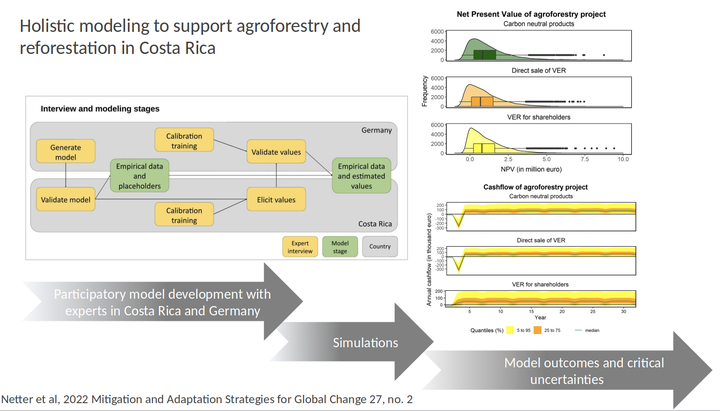
A cornerstone of our work is the development and application of holistic modeling approaches. This work is inspired by the principles of decision analysis, which is a pragmatic approach to producing models that are specifically designed to support particular decisions. Such models need to contain everything that is relevant to the decision context, and they should account for all risks and uncertainties. Our methods include participatory modeling, expert calibration, probabilistic simulation and specialized tools to quantify the value of information. We use such holistic modeling in diverse contexts, ranging from agricultural development decisions in Africa to the use of robotics in modern horticultural systems.
Projects
Sustainable Land Management
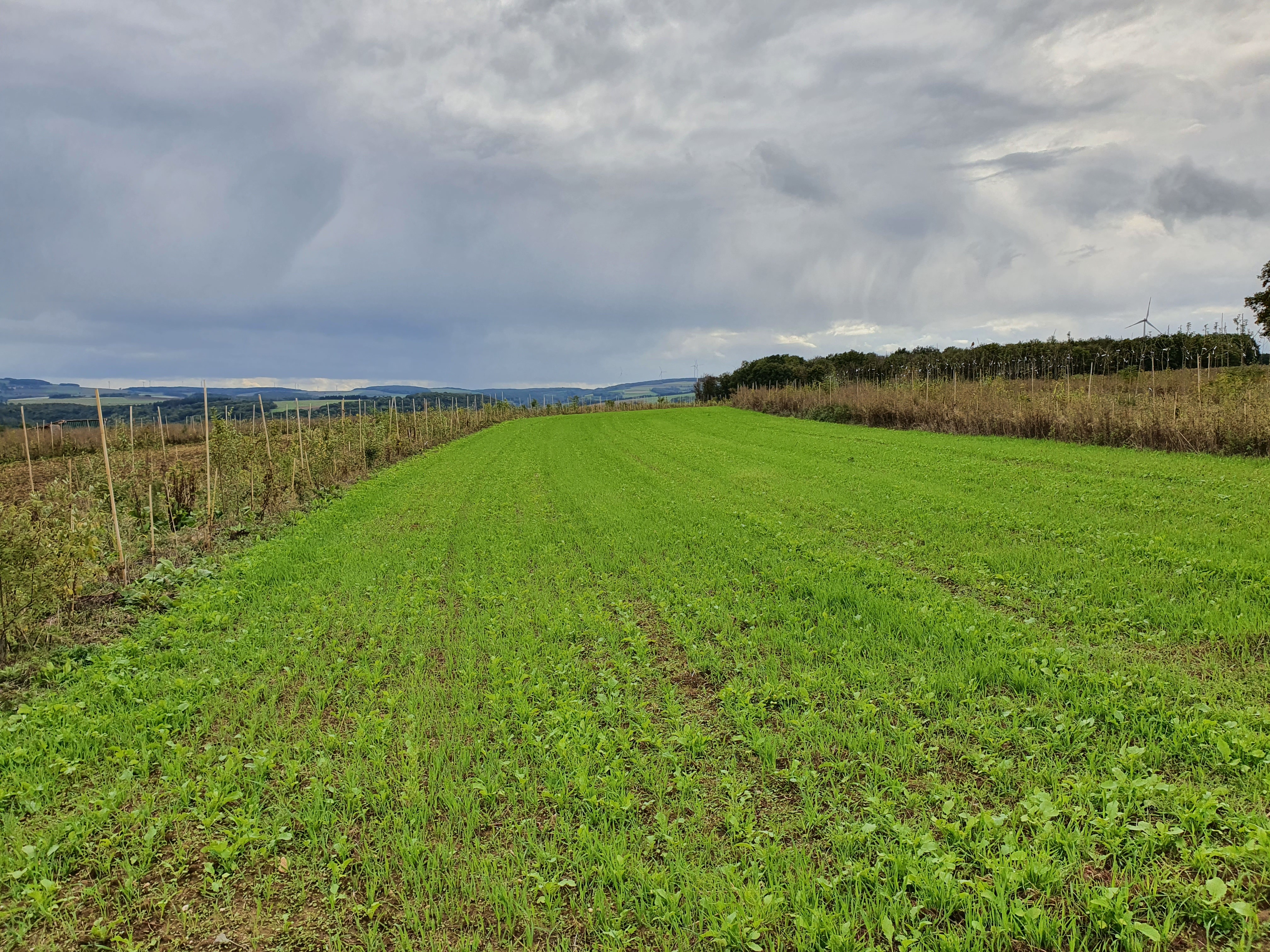
Our research explores how sustainable land-use practices can strengthen resilient farming systems. Focusing on agroforestry, carbon dioxide removal (CDR), and soil health-building practices, we examine their ecological, economic, social, and policy dimensions across Europe. By integrating these perspectives into decision-making, we aim to help farmers and policymakers identify sustainable land-use strategies that balance agricultural, environmental, and societal goals.
Projects
Forestry
Our research further encompasses forest ecosystems, with a current focus on Central European forests. Climatic change poses a challenge to forest health and productivity, and the increase of compound drought-heat-events increases tree mortality. We study ways to improve drought and heat stress monitoring via remote sensing platforms and aim at contributing to the climate-smart silvicultural strategies that are needed for tomorrow.
Projects

Further Projects
